About All Tours Driving Audio ToursFrom Oahu ToursFrom Maui ToursFrom Honolulu ToursBike ToursPrivate Tours Directions Hours & Fees
Find Tours 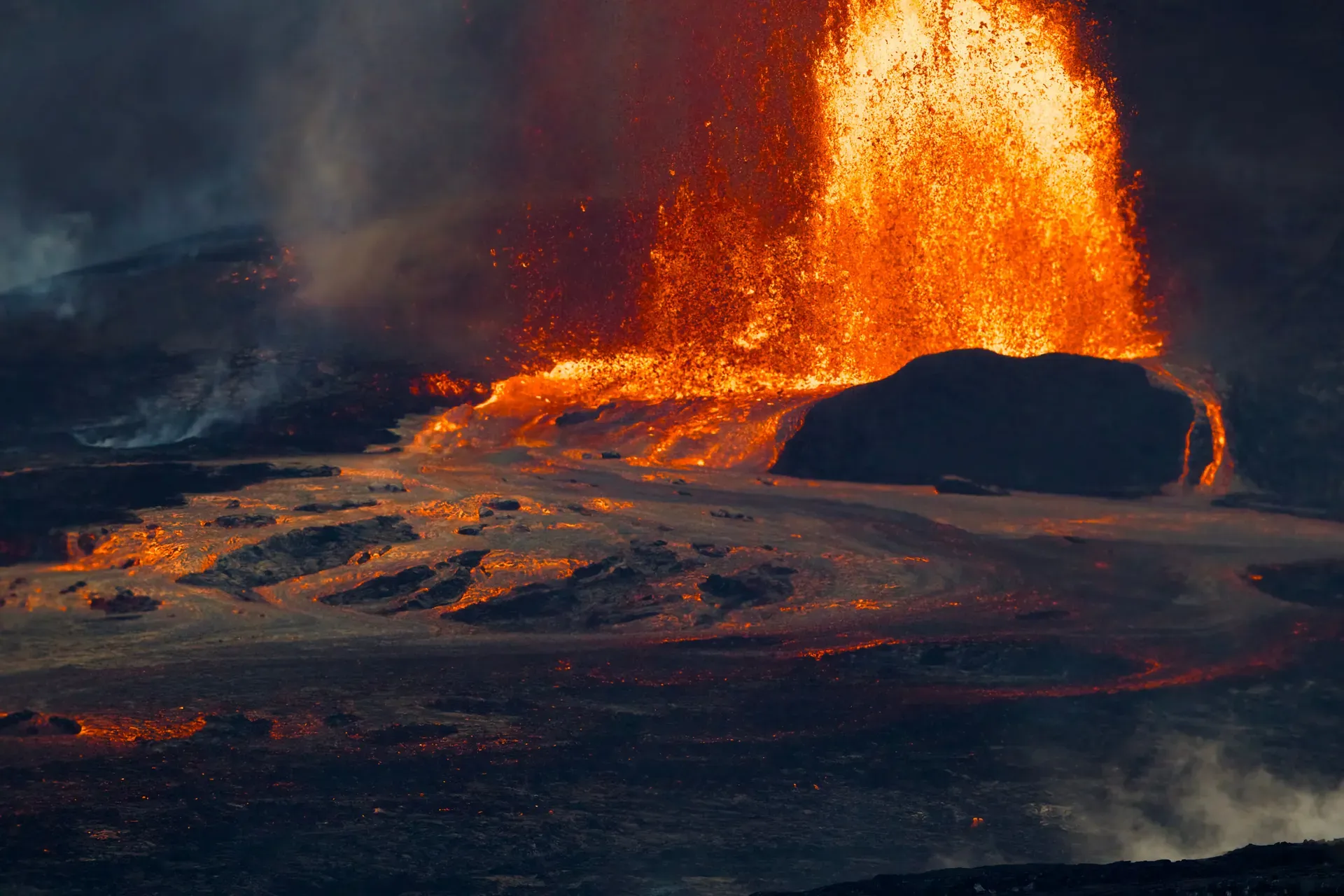
Two of Earth's most active volcanoes dominate the southeastern shore of Hawai'i Island. Mauna Loa and Kīlauea shape 354,461 acres of expanding coastline, giant fern rainforests, and barren deserts.
Two active volcanic systems, Mauna Loa and Kīlauea, define the 354,461 acres of Hawaii Volcanoes National Park on the southeastern shore of Hawai'i Island. The landscape shifts abruptly from giant fern rainforests to arid, cracked deserts and black basaltic coastlines. Young igneous rock less than 2,000 years old covers the majority of the terrain. Mauna Loa carries so much mass that its weight physically depresses the ocean floor beneath it.
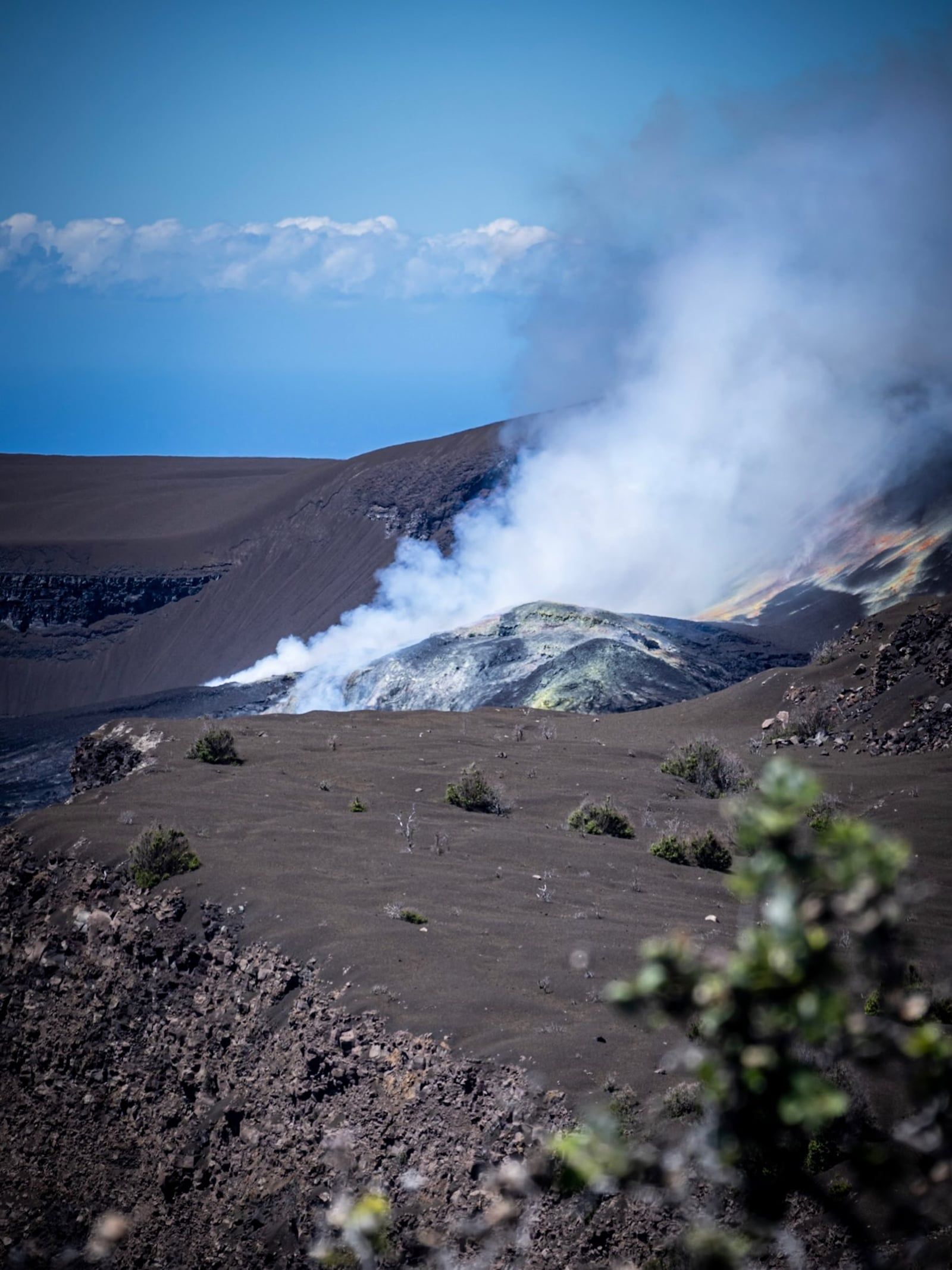
Visitors walk across solid lava lakes and stand at the edge of the four-square-mile Halemaʻumaʻu Crater. Steam rises from deep underground vents, carrying the sharp scent of sulfur dioxide. The ground underfoot consists of sharp, solid lava that can easily slice through lightweight footwear. Sudden shifts in wind direction push toxic volcanic gases across popular trails, forcing immediate closures and requiring hikers to evacuate the summit area.
The park operates 24 hours a day, allowing access to the nighttime glow of active craters. Entry costs $30 per private vehicle, admitting up to 14 passengers for seven consecutive days. Commercial mini-buses pay $100, and large motor coaches pay $200. The Kahuku Unit, a 150-year-old former cattle ranch on the slopes of Mauna Loa, operates on a limited Thursday-through-Sunday schedule and requires no entrance fee.
Winter weather brings dense fog that entirely obscures caldera views. Heavy rain frequently washes over the summit, dropping temperatures into the 40s. Checking the live USGS Hawaiian Volcano Observatory updates before driving up the mountain prevents wasted trips. Arriving before 9:00 a.m. or after 4:00 p.m. secures parking at popular trailheads like Kīlauea Iki, which fill completely during midday hours.
Wheelchair users can access the Welcome Center, Volcano House, and Volcano Art Center without barriers. The Sulphur Banks Trail offers an accessible route starting from the Steam Vents parking lot, and Kīlauea Overlook provides a short asphalt path to the caldera edge. Older adults or those with heart conditions must exercise extreme caution. Volcanic smog, known as vog, settles heavily in low-lying areas and triggers severe respiratory irritation.
President Woodrow Wilson signed the Act of Congress creating Hawaii National Park on August 1, 1916. This legislation established the eleventh national park in the United States and the first outside the contiguous states. The original boundaries protected the summits of Haleakalā on Maui and Mauna Loa and Kīlauea on Hawai'i Island. Early infrastructure developed around the Volcano House, a hotel originally built in 1846 directly on the edge of the Kīlauea caldera rim. Getting to the park required a grueling multi-day journey by steamship and horse before the completion of modern highways. Early tourists rode horses down into the active craters, guided by Native Hawaiians who navigated the shifting lava fields.
Congress expanded the protected acreage three times between 1922 and 1938, securing vast tracts of the Kau Desert and the coastal lowlands. The addition of the 'Ola'a Forest Tract in 1951 brought dense, old-growth rainforest under federal protection. In 1959, the Kīlauea Iki crater erupted, shooting lava fountains 1,900 feet into the air. The eruption left behind a 400-foot-deep lake of molten rock that took over three decades to completely solidify. Managing two distinct volcanic landscapes on separate islands proved logistically difficult for the National Park Service. On September 22, 1961, the government officially split the territory. The Maui section became Haleakalā National Park, while the Hawai'i Island section took the name Hawaiʻi Volcanoes National Park.
The United Nations designated the park as an International Biosphere Reserve in 1980. Seven years later, it became a UNESCO World Heritage Site under Criterion VIII for its ongoing geological processes. Today, park management balances public access with extreme geological hazards. The 2018 eruption of Kīlauea drained the summit lava lake and triggered tens of thousands of earthquakes. The caldera floor collapsed by 1,500 feet. This seismic activity destroyed massive sections of park infrastructure, including the Jaggar Museum, and forced long-term closures of the summit area. The Kīlauea Visitor Center closed for major renovations lasting until Summer 2026. All orientation services now operate out of a temporary Welcome Center at the Kilauea Military Camp, open daily from 9:00 a.m. to 4:45 p.m.
Conservationists actively battle invasive species that threaten the park's fragile ecosystems. Feral pigs and goats, introduced by early European explorers, strip the native vegetation and accelerate soil erosion. The park service installed hundreds of miles of fencing to protect the endangered nēnē (Hawaiian goose) and the rare silversword plants that grow on the harsh alpine slopes of Mauna Loa.
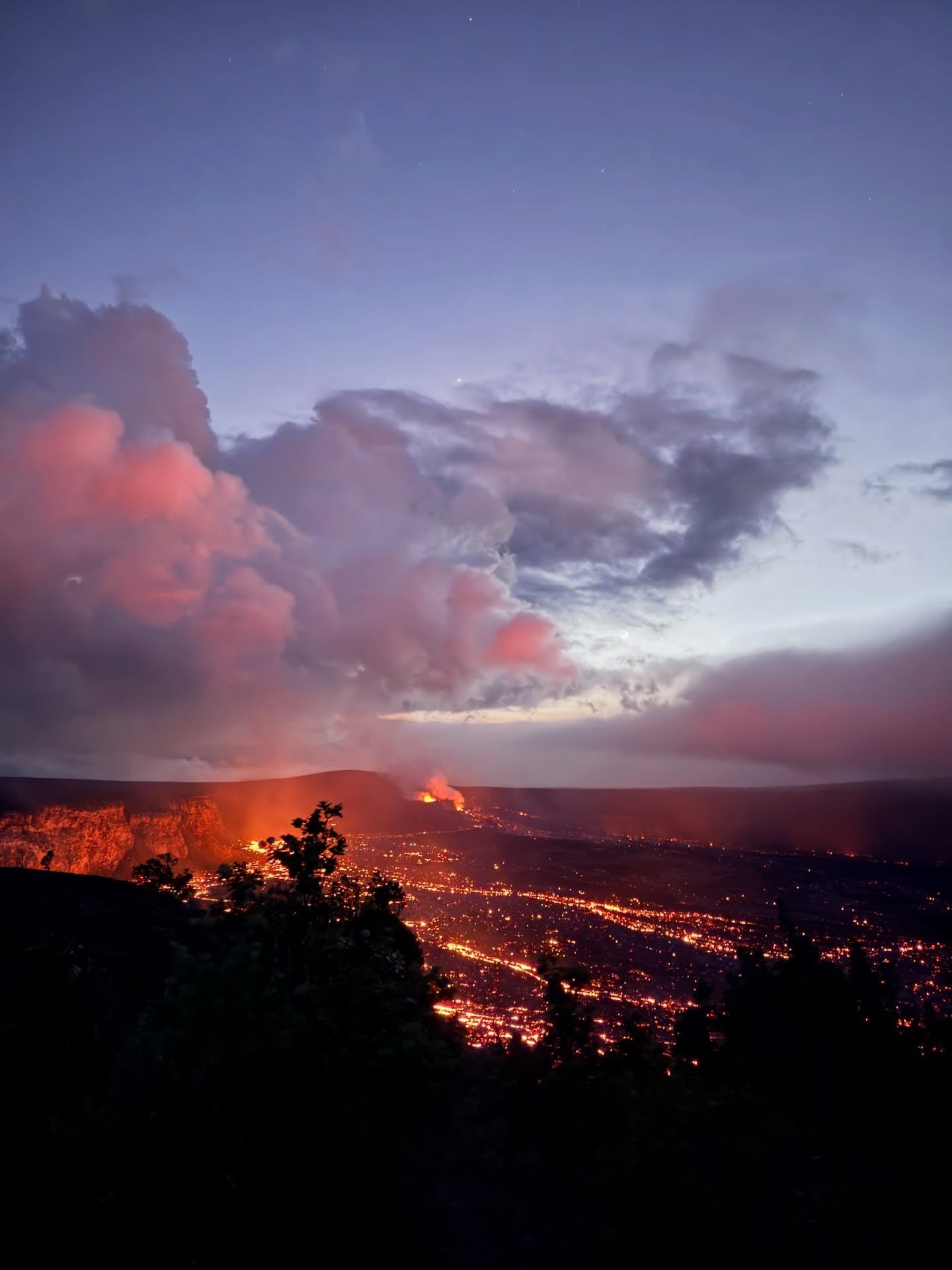
Mauna Loa rises 13,679 feet above sea level, but its true scale lies hidden underwater. Measured from its base on the ocean floor, the shield volcano reaches 42,420 feet in height. The immense weight of this basaltic mass causes the Pacific plate to sink. Kīlauea sits lower at 1,250 meters in elevation but produces highly fluid lava flows that continually add new land to the island's southeastern coast. The Halemaʻumaʻu Crater dominates the Kīlauea summit. This four-square-mile depression constantly shifts in depth and shape depending on the magma chamber below. At night, the active lava lake casts a bright orange glow against the steam clouds rising from the crater floor.
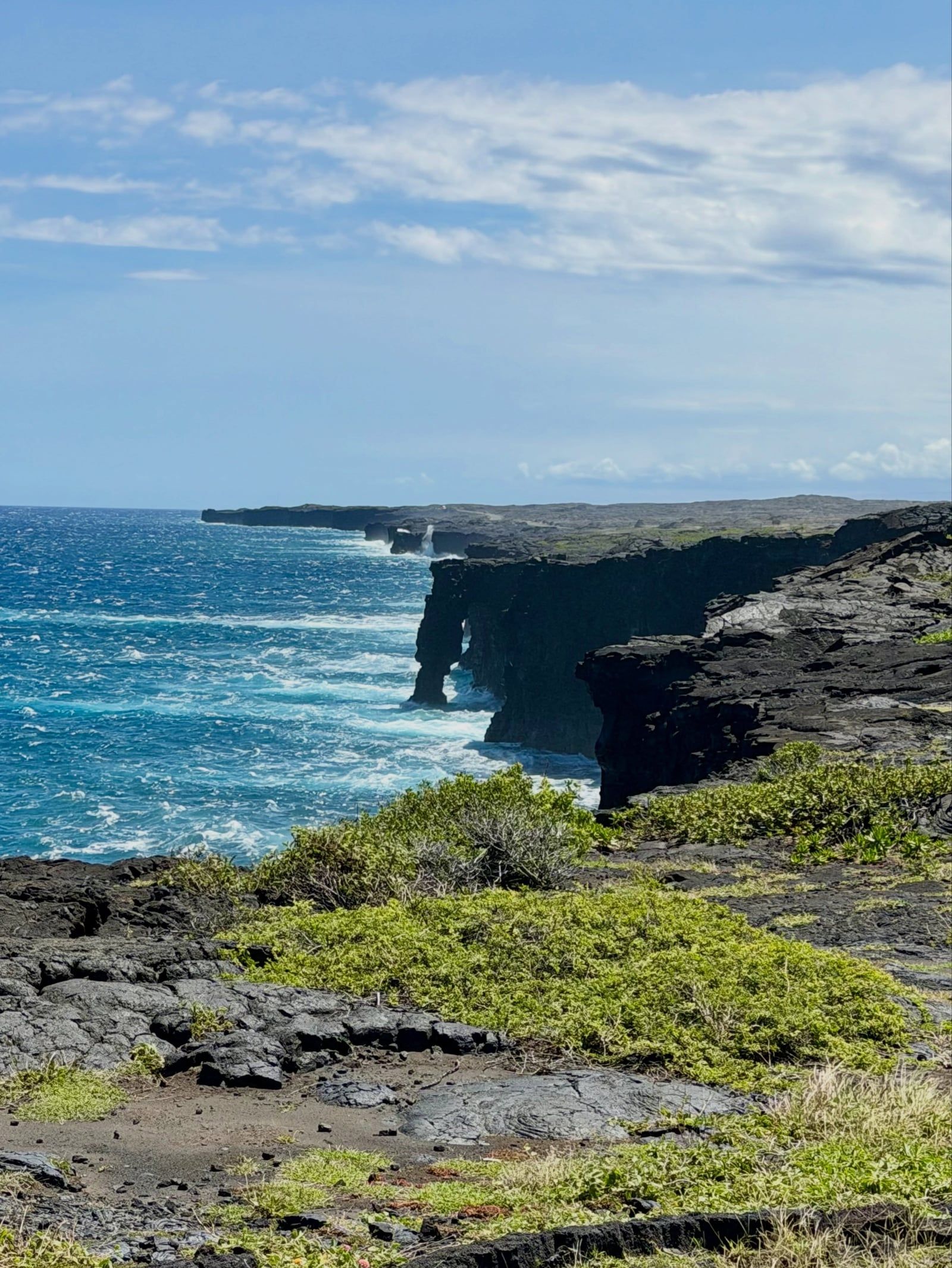
The 18.8-mile Chain of Craters Road drops 3,700 feet from the summit caldera down to the Pacific Ocean. Drivers pass deep pit craters, vast fields of hardened black pahoehoe lava, and ancient Hawaiian petroglyph fields. The Hōlei Sea Arch stands at the end of the pavement. This 90-foot-tall natural basalt arch was carved out of the sea cliffs by pounding ocean surf. Unstable cliff edges and deep earth cracks line the coastline, making off-trail exploration highly dangerous. High surf frequently crashes over the coastal rocks, sweeping unsuspecting pedestrians into the turbulent ocean.
Underground, the Nāhuku (Thurston Lava Tube) stretches through the rock beneath a giant tree fern forest. This 500-year-old cave formed when the outer crust of a lava river cooled and hardened while the molten interior kept flowing out to the sea. Electric lights illuminate the damp, curved rock walls, revealing mineral deposits left by the retreating magma. At the Sulphur Banks, yellow crystals coat the clay soil. Volcanic steam vents release hydrogen sulfide and sulfur dioxide, creating a distinct rotten-egg odor that hangs heavy in the humid air. The ground temperature here frequently exceeds 200 degrees Fahrenheit. Visitors with respiratory conditions must avoid this area entirely due to the concentrated toxic gases.
The Kīlauea Iki Trail offers a 3.2-mile loop that descends 400 feet through the rainforest canopy directly onto the crater floor. Hikers walk across the fractured surface of the 1959 lava lake. Steam still rises from the cracks in the dark gray basalt, and the rock feels warm to the touch. The trail requires navigating steep, rocky switchbacks and following stacked stone cairns across the featureless lava plain. Heavy rain turns the smooth sections of pahoehoe lava into a slick, hazardous surface.
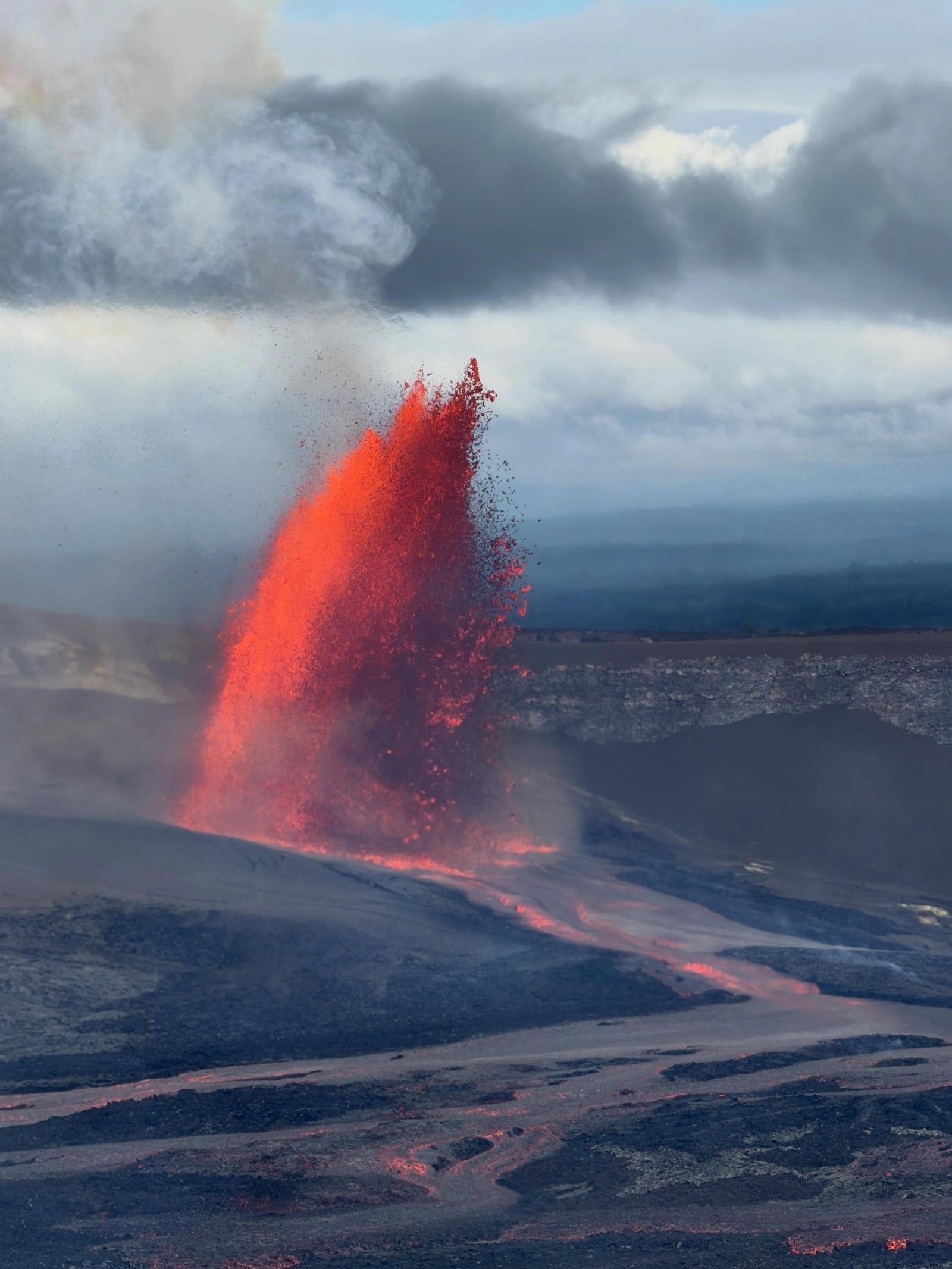
Kānaka Maoli (Native Hawaiian) people maintain a continuous spiritual connection to the volcanic landscape. The summit of Kīlauea is the sacred home of Pelehonuamea, the deity of volcanoes and fire. Eruptions are not viewed as natural disasters, but as sacred events where Pele creates new land and destroys what she chooses. Native Hawaiians regularly visit the Halemaʻumaʻu Crater to offer chants, dances, and hoʻokupu (offerings) to honor her presence. Park management routinely closes specific overlooks and trails to accommodate these private religious ceremonies.
Federal law and park regulations strictly protect the physical remnants of ancient Hawaiian settlements. The Puʻuloa Petroglyphs, located near the coast, feature over 23,000 images carved into the hardened lava fields. These carvings document centuries of human history, marking births, journeys, and significant events. Families traveled to this specific site to place the umbilical cords of their newborns in small holes carved into the rock, securing a long life for the child. Making rubbings of these stone carvings is illegal because the friction degrades the fragile basalt.
The park landscape also contains historic ruins from the 19th-century ranching era. The Kahuku Unit features stone walls and relics from a 150-year-old cattle operation. Visitors walking the Kona Trail encounter 1887 lava formations cutting directly through these former pastures. Removing any rock, black sand, or cultural artifact from the park violates federal law and deeply offends local cultural protocols. Local legends warn that anyone who takes lava rock from the island will suffer extreme misfortune until the rocks are returned to Pele. The park receives hundreds of packages every year containing stolen rocks mailed back by guilty tourists.
The integration of traditional Hawaiian knowledge with modern volcanology shapes how the park operates today. Scientists at the Hawaiian Volcano Observatory frequently consult with cultural practitioners to understand the historical context of eruptions. Ancient Hawaiian chants accurately describe the geological sequence of Kīlauea's past caldera collapses, matching the physical evidence found by modern geologists. This oral history predates written records by centuries. Park rangers emphasize this dual perspective during guided walks, ensuring visitors understand that the landscape is both a scientific laboratory and a living religious site.
The 1959 eruption of Kīlauea Iki left a 400-foot-deep lava lake that took over 30 years to completely solidify.
The park provides critical habitat for the nēnē, Hawaii's state bird, which faces frequent threats from speeding vehicles.
Mauna Loa carries so much physical mass that its weight causes the ocean floor beneath it to sink.
The United States Mint featured Hawaii Volcanoes National Park on the 14th quarter of the America the Beautiful series in 2012.
Launching or landing unmanned aircraft remains strictly prohibited everywhere within the 354,461-acre park boundary.
The park gates never close, allowing visitors to watch the volcanic glow and stargaze simultaneously at 3:00 a.m.
Coastal ecosystems within the park feature rare green sand created by crushed olivine crystals eroding from ancient lava flows.
The entrance fee is $30 per private vehicle, $25 per motorcycle, or $15 per pedestrian or bicyclist. Passes remain valid for seven consecutive days. The entrance station operates as a cashless facility and only accepts credit or debit cards.
Yes, the main areas of the park remain open 24 hours a day, 365 days a year. The temporary Welcome Center at Kilauea Military Camp operates on a restricted schedule from 9:00 a.m. to 4:45 p.m. daily.
Lava visibility is never guaranteed because Kīlauea's volcanic activity changes rapidly. Visitors must check the live USGS Hawaiian Volcano Observatory updates and NPS alerts to confirm the current eruption status before arriving.
The Kīlauea Visitor Center is closed for renovations until Summer 2026. A temporary Welcome Center operates out of the Kilauea Military Camp on Crater Rim Drive East, exactly 1.2 miles from the closed facility.
Pets are strictly prohibited in all undeveloped areas, including designated wilderness and backcountry trails. They must remain leashed in developed areas like parking lots, paved overlooks, and campgrounds.
The fare-free Hele-On Bus operated by Hawaiʻi County provides daily service from Hilo. Route 11 runs directly to Volcano, dropping passengers near the Volcano House hotel.
The Kahuku Unit opens Thursday through Sunday from 8:00 a.m. to 4:00 p.m. It remains closed Monday through Wednesday and requires no entrance fee for access.
The park features two drive-in campgrounds named Namakanipaio and Kulanaokuaiki. Backcountry camping is permitted but requires a signed permit obtained from the Backcountry Camping Permit Office.
Wear sturdy, closed-toe hiking boots and long pants to protect against sharp lava rock. Bring warm layers and rain gear, as weather shifts rapidly from hot sun to cold mist at high elevations.
Collecting or removing rocks, lava, sand, plants, or cultural artifacts is strictly forbidden by federal law. Taking these items also violates Native Hawaiian cultural protocols and carries heavy fines.
Browse verified tours with free cancellation and instant confirmation.
Find Tours